Ever since I was little, I’ve always loved the magical and mystical. Unfortunately, it wasn’t exactly encouraged, especially if I were to have a successful career as a first-generation college student (with Asian-American values). Ironically, it wasn’t until I was in formal training to become a counselor that I returned to that space of spirit, to my healing inheritance and ancestry.
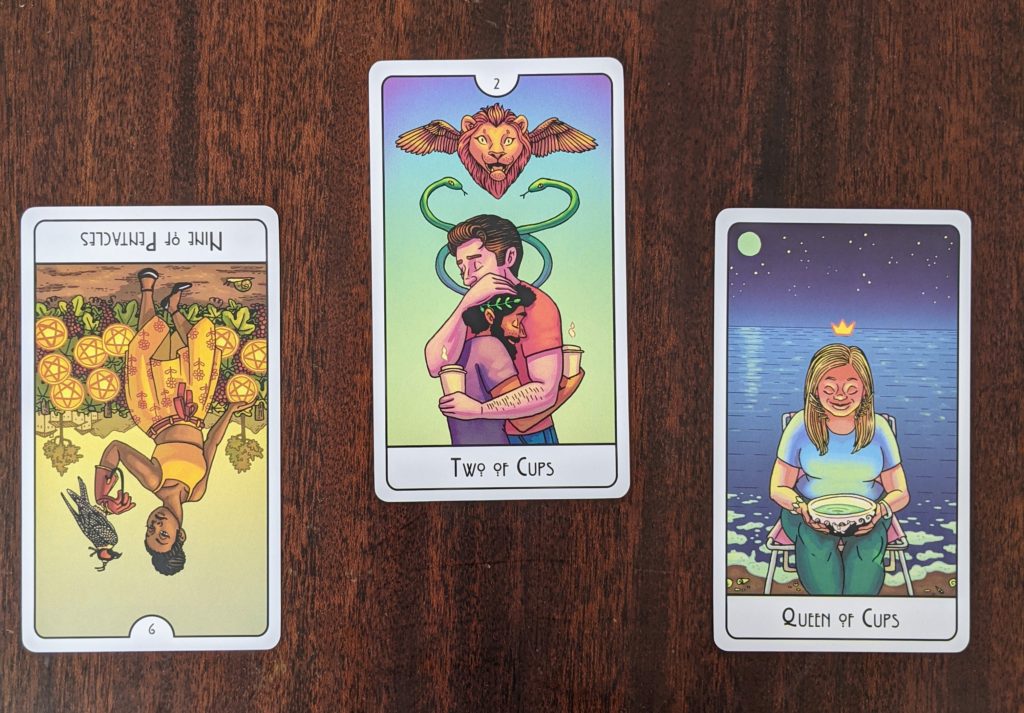
While in graduate school, a close friend gave me my first tarot deck. Eager to learn, I did all the things – took a basic tarot class, listened to podcasts, talked with friends, filled a book with notes. I discovered that each card has their own background and personality. Even more, I learned that the deck as a whole could be laid out to describe several core stories as well.
The more that I practiced, the more I developed my own association and relationship with each card. As I developed a relationship with the cards, my relationship with myself and others became deeper. Eventually, this process started to bleed into my counseling work. Magic happened and was witnessed.
Whether or not you believe in the spiritual elements and process of tarot reading, many people can benefit from it. Through this practice, we learn how to pause with, explore and make meaning out of the images in relation to our lives. Despite attempts to separate the “spiritual” from “science,” people have been studying the power and influence of imagery for decades.
Archetypes, Myth and the Hero’s Journey
Founder of analytic psychology, Carl Jung identified archetypes that could be found in places like folklore and dreams. These archetypes, or characters, each have their own interests, motivations, and patterns of behaviors. He claimed that we all have these various parts within our psyche, and he believed that through reflection of these parts, we can come to greater self-awareness. We even find among these parts are ones we are reluctant to accept, or are simply unaware of (but of which are still impacting us).
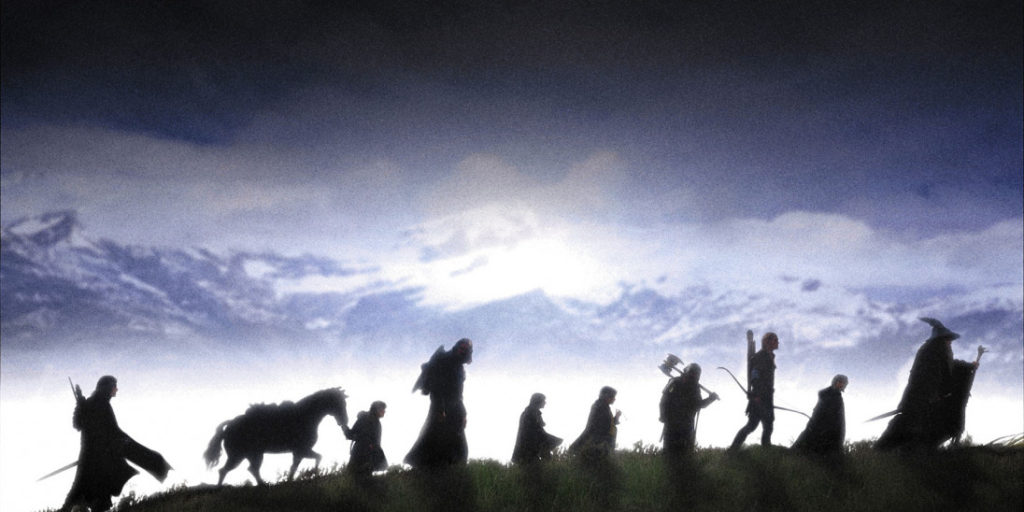
Others have followed in the same vein. Joseph Campbell authored many books about myth and related topics, including the “hero’s journey.” He explained that at some point in our lives (or many times), we all go through a story set-up, a conflict, and resolution, and that through this journey we may gain knowledge, skills and companions, and return to our homes or selves with this new growth. This may explain why we are drawn to stories, legends, and folklore like the Lord of the Rings, Beowulf, and Bluebeard. They are reflections of our own journeys.
Ethno-clinical psychologist and cantadora, Clarissa Pinkola Estes further highlights how these tales can guide us through challenging times. In much of her work, she breaks down the symbolism of different stories and what lessons are being offered. According to Estes, stories remind us that our ancestors have walked and survived similar paths for generations and across cultures, and that we can do hard things, too.
Gifts of the Tarot
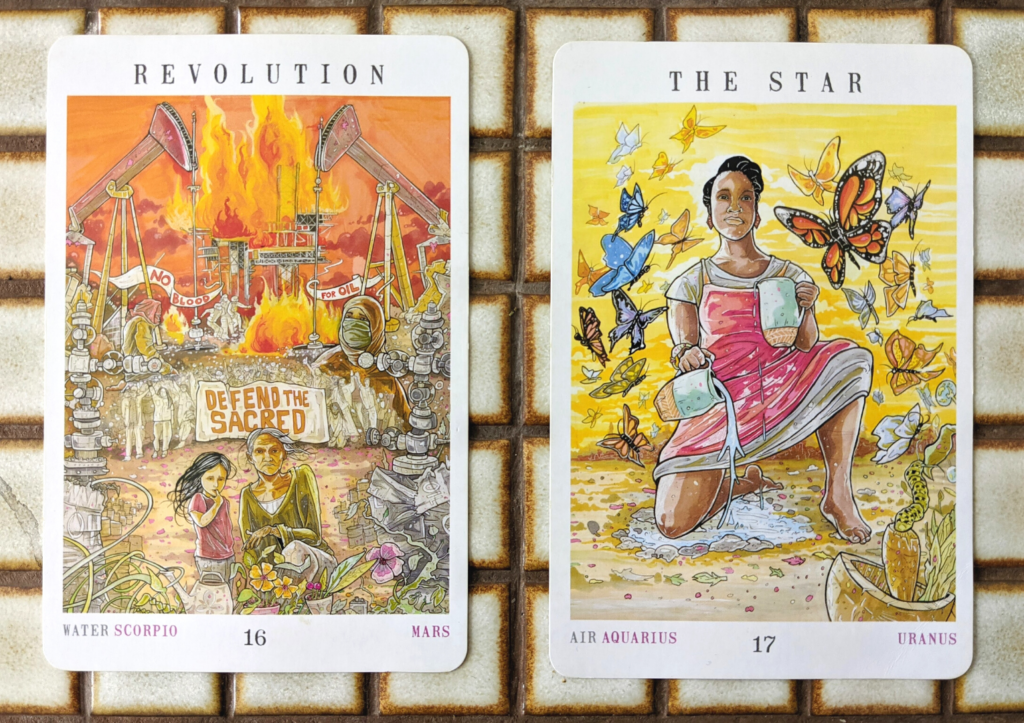
So, how does this relate to therapy? Well, we see the Hero’s Journey right there in the line of the Major Arcana (of which there are 22 in the traditional 78-card deck). It starts with the Fool, and the Fool’s journey is that they decide to leave the spiritual realm to start a new journey on the Earthly plane, and that they go through different life challenges and phases which help them grow and develop. Each subsequent card in the Major Arcana are versions of the Fool, as they learn life’s lessons on manifestation and inner power (the Magician), abundance (the Empress), our lives being set fire and having to begin again (the Tower), profound healing (the Star) and so on and so forth.
When we use the tarot as a tool for healing, we find ourselves and our struggles in the characters and storylines of the cards. By having these images outside of ourselves to view, we can pause and take a hard look at something that we are otherwise too immersed in to see clearly. They are mirrors. Some may argue that counseling itself serves a similar purpose.
Tarot can also normalize our trials and tribulations. When we pull something like the Tower or the Devil, we can be reminded that these images show up because they are common themes. By realizing that we all go through periods of deep reckoning or shame, we can better accept where we are, and be more ready to release them. We also are reminded that we are not alone in these challenges, which can sometimes feel like the hardest part.
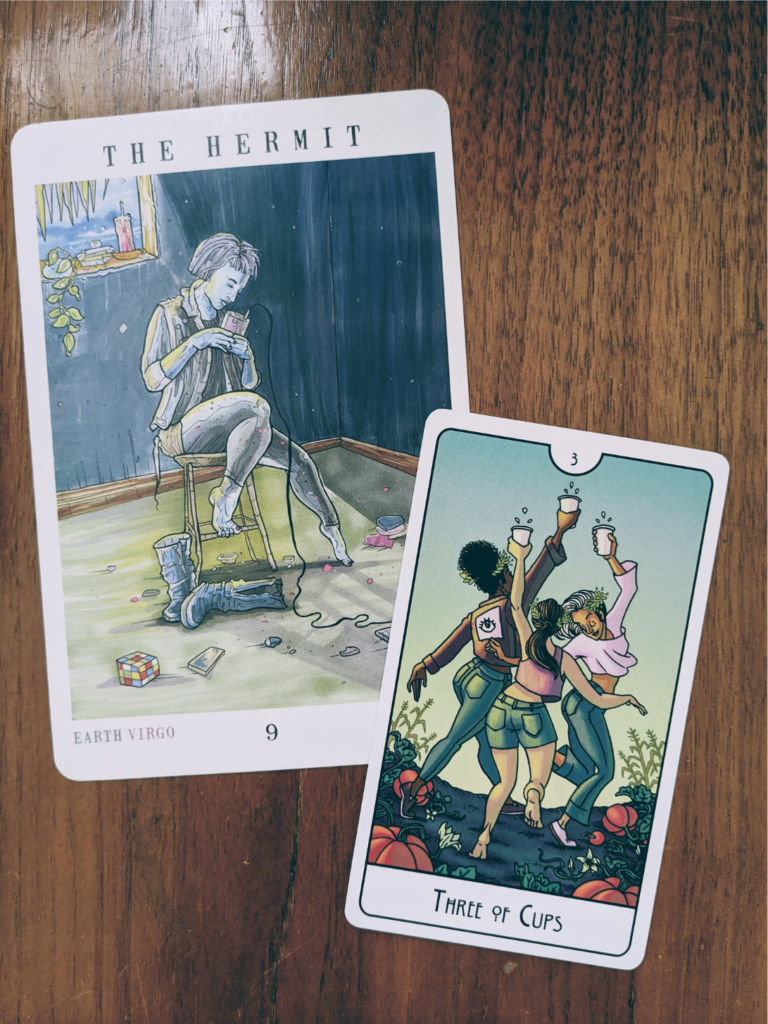
One of the most powerful medicines of the tarot is the guidance it gives. As Clarissa Pinkola Estes and Joseph Campbell assure us, we can find bread crumbs in these stories. With the collapse of the Tower, we are given an opportunity to rebuild with greater integrity. Following this fiery wreckage, a healing space may soon follow with the cooling, watery Star. When we see the path before us, we can develop more trust in the process.
These gifts can serve as strong grounding tools when we feel lost or overwhelmed. Knowing that similar challenges have been overcome can provide great relief. Putting the issues outside of ourselves can also create useful space between the challenges and ourselves. With space, we can breathe and respond mindfully.
Our Work
We all have our own parts and paths that form a narrative of our lives. We have our own perspectives, too. With this in mind, I truly enjoy hearing different folks’ interpretations about their personal readings, including those I work with. My clients have access to a rich visual language to share their experiences. Together we can witness or explore the depth of these vast landscapes. Stepping back, we can also weave these story threads into the greater tapestry of their own story and that of the collective. This interconnectedness and parallel process is all around and within us. If that isn’t magical, I don’t know what is.
If you’re interested in moving into this process with me, reach out and schedule a consultation to see if we would be a good fit.
Blessings,
Kat
More Blog Posts
Hi, I’m Kat
I consider myself a companion on the healing process journey. I help people reconnect with themselves and others, learn to sit with discomfort and grief, and build capacity for curiosity and joy.
I have six years of experience working in community mental health, with some of our most marginalized communities. Through these, and personal experiences, I have become more committed to informing and integrating my work with social justice issues.
I am also a licensed mental health counselor in Washington state (LH60849137).